Calculate Your High School GPA
| Course | Grade | Credits | Weight | Remove |
|---|---|---|---|---|
Grade Point Reference
| Grade | Unweighted | Honors (+0.5) | AP / IB (+1.0) |
|---|---|---|---|
| A+ / A | 4.0* | 4.5 | 5.0 |
| A− | 3.7 | 4.2 | 4.7 |
| B+ | 3.3 | 3.8 | 4.3 |
| B | 3.0 | 3.5 | 4.0 |
| B− | 2.7 | 3.2 | 3.7 |
| C+ | 2.3 | 2.8 | 3.3 |
| C | 2.0 | 2.5 | 3.0 |
| C− | 1.7 | 2.2 | 2.7 |
| D+ | 1.3 | 1.8 | 2.3 |
| D | 1.0 | 1.5 | 2.0 |
| F | 0.0 | 0.0 | 0.0 |
* A+ GPA = 4.0 at most US colleges; a minority award 4.3.
How the High School GPA Calculator Works on the 4.0 Scale
This high school GPA calculator runs the same math your registrar runs. It converts each letter grade to a grade-point value on the standard 4.0 scale, applies an AP or Honors bonus when you select one, multiplies by credit value, and averages the result. Both unweighted and weighted GPA appear at once so you can see how course rigor changes your number.
The tool ships with 4 rows for a quick start. You can add or remove rows for block schedules, dual-enrollment, or summer courses. The calculator answers the question students ask most often: how to calculate GPA in high school without sitting down with a transcript and a calculator.
How to calculate GPA high school step by step
- Enter each course you are taking this semester or year.
- Pick the letter grade you earned or expect to earn.
- Mark each course as Regular, Honors, or AP/IB.
- Set the credit value (1 for most year-long high school courses).
- Read both your unweighted and weighted GPA at the bottom.
Average High School GPA in the United States
The average high school GPA in the United States hovers around 3.0 on the unweighted 4.0 scale. The most recent NCES High School Transcript Study puts the national mean GPA closer to 3.1, with private school averages running slightly higher than public school averages. Average GPA has been climbing for two decades, a trend education researchers call grade inflation.
For context: a 3.0 unweighted GPA represents a B average across every course. A 3.5 puts you above the national mean and into the competitive range for most flagship state universities. A 3.8 or higher is what selective private colleges expect to see from admitted students, alongside a transcript loaded with AP or IB rigor.
Average HS GPA by class year
Sophomore and junior averages tend to dip slightly below freshman averages because course difficulty ramps up. Senior averages rebound when students take electives and AP courses they care about. If you are tracking semester GPA, do not worry about a small mid-year drop; admissions officers look at trend, not single semesters.
HS GPA Calculator: Weighted Versus Unweighted
The HS GPA calculator shows both versions because schools and colleges use them for different purposes. Unweighted GPA answers how well you performed in your courses. Weighted GPA answers how challenging those courses were. Both numbers travel together on a transcript, and both matter to admissions readers.
Unweighted GPA on the 4.0 scale
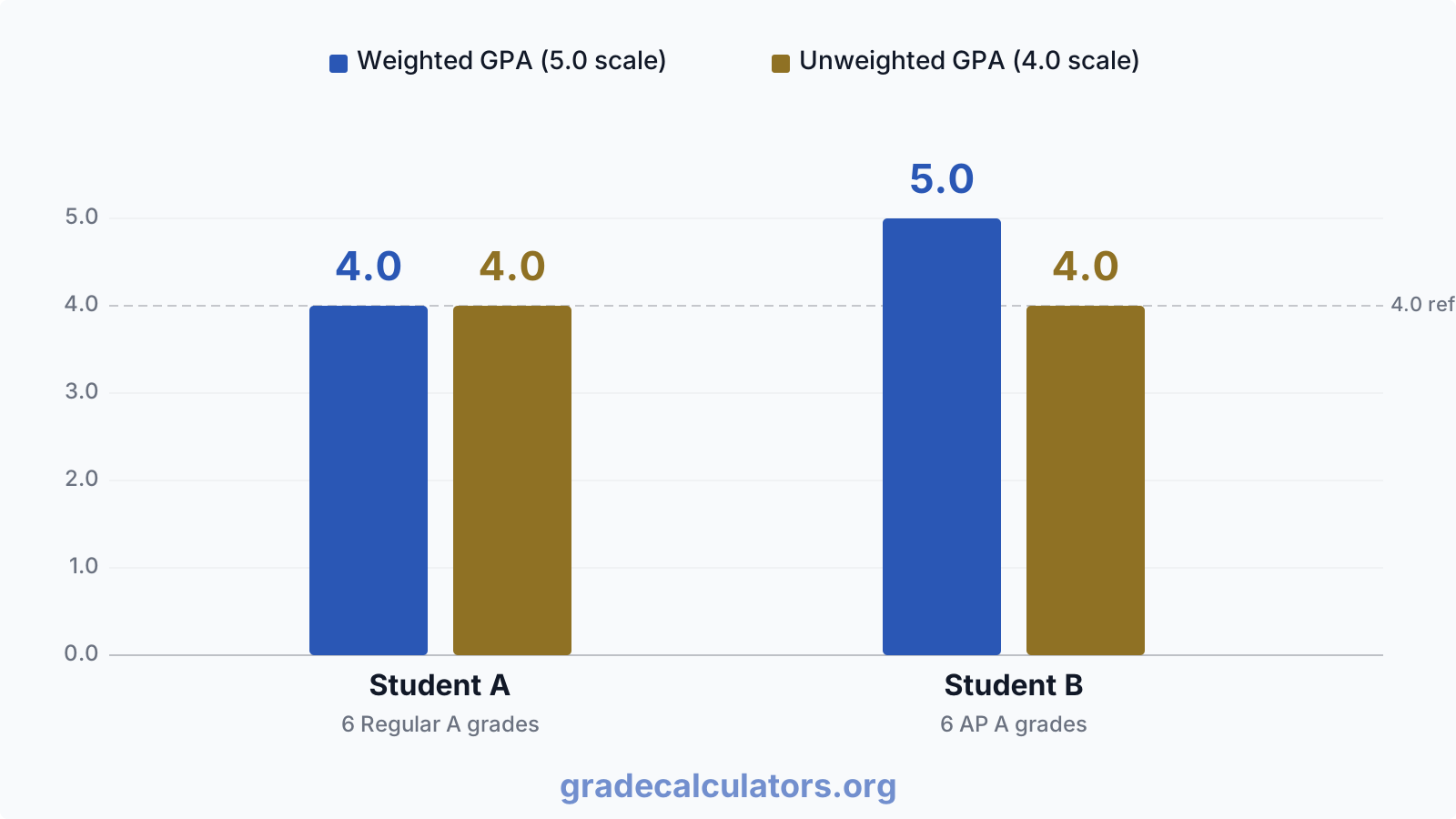
Unweighted GPA treats every class the same. An A in ceramics counts the same as an A in AP Chemistry. The scale tops out at 4.0, which means straight A grades across every course. This version answers a simple question: how well did you perform in the classes you took? Schools that report unweighted GPA use the standard conversion: A = 4.0, B = 3.0, C = 2.0, D = 1.0, F = 0.0. Plus and minus modifiers shift the value by 0.3 in either direction.
Weighted GPA with Honors and AP boosts
Weighted GPA rewards students who choose harder courses. The most common system adds 0.5 grade points for Honors classes and 1.0 grade points for AP or IB classes. An A in an AP course is worth 5.0 instead of 4.0 on the weighted scale. A B in AP Physics represents more mastery than an A in a standard-level course, and weighting captures that. Without it, students who avoided difficult classes would have an unfair GPA advantage.
GPA Calculator High School: Grade Points and Course Type Adjustments
Standard 4.0 scale formula
- Grade Points = letter grade converted to 4.0 scale (A=4.0, B=3.0, etc.)
- Credits = credit hours for each course (typically 1 for high school)
Weighted GPA formula with AP and Honors courses
- Grade Points = standard 4.0 scale value
- Boost = 0 for Regular, +0.5 for Honors, +1.0 for AP
- Credits = credit hours for each course
Common GPA in High School Charts and Conversion Tables
The chart below shows the high school GPA chart most US schools follow, including the AP and Honors bonus columns. Use it to verify the calculator output or check what a 3.7 high school GPA represents in letter grades.
| Letter Grade | Unweighted | Honors (+0.5) | AP / IB (+1.0) |
|---|---|---|---|
| A+ / A | 4.0* | 4.5 | 5.0 |
| A- | 3.7 | 4.2 | 4.7 |
| B+ | 3.3 | 3.8 | 4.3 |
| B | 3.0 | 3.5 | 4.0 |
| B- | 2.7 | 3.2 | 3.7 |
| C+ | 2.3 | 2.8 | 3.3 |
| C | 2.0 | 2.5 | 3.0 |
| C- | 1.7 | 2.2 | 2.7 |
| D+ | 1.3 | 1.8 | 2.3 |
| D | 1.0 | 1.5 | 2.0 |
| F | 0.0 | 0.0 | 0.0 |
* A+ GPA = 4.0 at most US colleges; a minority award 4.3.
Some schools do not add weight to D or F grades in Honors and AP courses. Others cap the weighted boost at A and B grades only. Always verify with your specific school's registrar before relying on the calculator number for an official report.
Good high school GPA benchmarks
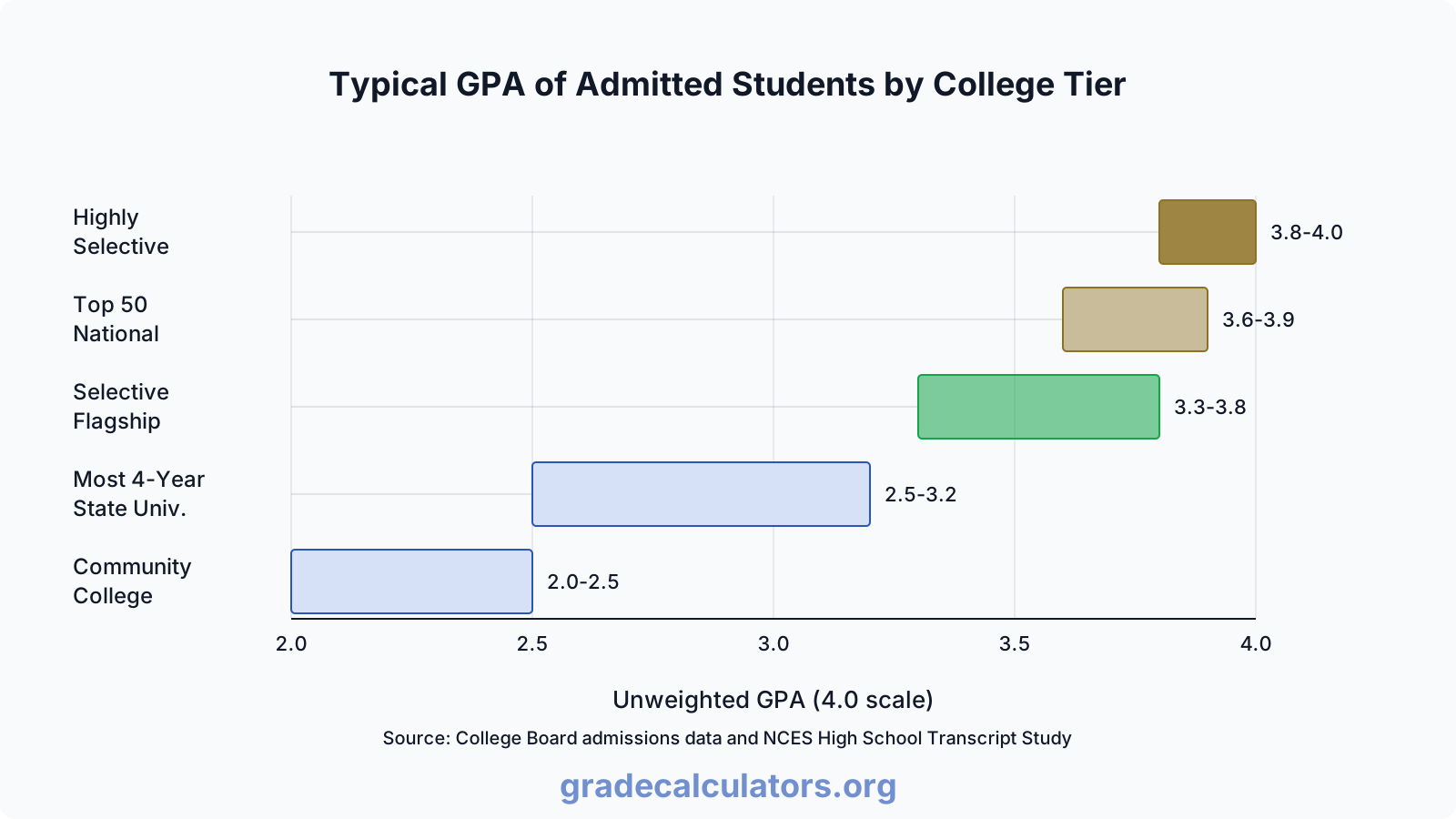
A good high school GPA varies by goal. Community colleges admit applicants with 2.0 or higher. State universities typically expect 3.0 unweighted. Flagship publics and selective privates target 3.5 and above. The Ivy League and similarly ranked institutions admit students with unweighted GPAs near 3.9, paired with the most rigorous course load the school offers. Source: College Board admissions data summaries (collegeboard.org).
Max GPA for high school students
The max GPA for high school students is 4.0 unweighted and 5.0 on the most common weighted scale. Some districts use 5.5 or 6.0 weighted ceilings; Texas and Georgia districts often run higher scales. The maximum at your school depends entirely on its published grading policy. Check the student handbook to confirm.
GPA Calculator High School No Credits: When to Use Each Mode
Many high schools assign 1 credit per year-long course, which means the credit field does not change the calculation. If your school does not publish credit values, leave every row at 1 credit and the calculator works as a gpa calculator high school no credits version. The math reduces to a simple average of grade points across courses.
Use the credit field when your school assigns different credit values to half-year courses, lab science add-ons, or extended block periods. A 0.5-credit semester elective should carry less weight than a 1-credit year-long core class.
Tips to Strengthen Your High School GPA
- Balance your course load. Taking every AP available might hurt your GPA if you cannot maintain strong grades. Choose AP subjects you genuinely enjoy and can commit time to.
- Prioritize core subjects. Colleges pay closest attention to grades in English, math, science, social studies, and foreign language. Strong performance in these areas matters more than a high overall GPA padded with easy electives.
- Track your GPA each semester. Run the gpa calc hs after every grading period so you can spot trends early. A downward trend raises more flags than a single bad semester followed by improvement.
- Retake strategically if allowed. Some schools let you retake a course and replace the old grade. If your school offers this, a retake can significantly improve your GPA, especially if the original grade was a D or F.
To calculate your GPA across all four years of high school, use the cumulative GPA calculator. When you start college, transition to the college GPA calculator for credit-hour weighting. For converting individual assignment scores into a class grade, try the grade calculator. National GPA averages and trend data come from the NCES High School Transcript Study (nces.ed.gov).